
Bluplate
Bluplate
A restaurant labor solution.
VCU Brandcenter Master's Thesis
VCU Brandcenter Master's Thesis
Dec. 2021
Dec. 2021
May 2022
May 2022
Background
In the aftermath of the COVID-19 pandemic, the restaurant industry faced a labor shortage that threatened its recovery. As low-wage industries across the economy struggled to attract workers, restaurants were hit particularly hard. Many former employees were reluctant to return to low-paying, high-demand positions they had left behind during temporary closure. This mass exit left restaurant managers scrambling to rebuild their workforces at the moment consumer demand was rebounding, creating a mismatch between staffing capacity and operational need.
In the aftermath of the COVID-19 pandemic, the restaurant industry faced a labor shortage that threatened its recovery. As low-wage industries across the economy struggled to attract workers, restaurants were hit particularly hard. Many former employees were reluctant to return to low-paying, high-demand positions they had left behind during temporary closure. This mass exit left restaurant managers scrambling to rebuild their workforces at the moment consumer demand was rebounding, creating a mismatch between staffing capacity and operational need.
Challenge
Find a way for restaurants to tap into a flexible, on-demand workforce that could help meet resurging consumer demand, without resorting to inflated wages and overtime costs to fill in scheduling gaps.
Find a way for restaurants to tap into a flexible, on-demand workforce that could help meet resurging consumer demand, without resorting to inflated wages and overtime costs to fill in scheduling gaps.
Opportunity
Create a product that connects restaurants with a staffing pool of nearby university students, giving managers a way to fill labor gaps without overworking full-time staff or compromising the customer experience.
Create a product that connects restaurants with a staffing pool of nearby university students, giving managers a way to fill labor gaps without overworking full-time staff or compromising the customer experience.
Discovery
Discovery
Knowing this is a problem that involves two parties, restaurant owners and workers, research was conducted for both potential end users of the solution, helping define the problem and uncovering needs.
Knowing this is a problem that involves two parties, restaurant owners and workers, research was conducted for both potential end users of the solution, helping define the problem and uncovering needs.
Restaurant Recovery
Restaurant Recovery
Restaurant and food service sales fell $240 billion short of pre-pandemic forecasts in 2020, forcing more than 110k eating and drinking establishments to close, either temporarily or permanently. 2021 will be a year of rebuilding, with trends like off-premise dining and delivery continuing to gain importance as consumer preferences shift. In the interim, restaurants need to find solutions for filling gaps as consumer demand escalates. 51% of restaurant owners say hiring, training and retaining staff is the hardest challenge they face.
Restaurant and food service sales fell $240 billion short of pre-pandemic forecasts in 2020, forcing more than 110k eating and drinking establishments to close, either temporarily or permanently. 2021 will be a year of rebuilding, with trends like off-premise dining and delivery continuing to gain importance as consumer preferences shift. In the interim, restaurants need to find solutions for filling gaps as consumer demand escalates. 51% of restaurant owners say hiring, training and retaining staff is the hardest challenge they face.
Source: National Restaurant Association (2021)
Job Openings: Restaurants & Hotels
(3/2020 - 7/2021)
Job Openings: Restaurants & Hotels (3/2020 - 7/2021)
Job Openings: Restaurants & Hotels
(3/2020 - 7/2021)
Level in Thousands

Restaurant job openings jumped from ~300k to 1.7 million between March '20 & July '21.
Restaurant job openings jumped from ~300k to 1.7 million between March '20 & July '21.
Source: US Bureau of Labor Statistics
Restaurant and Hotel job openings highest on record, WP (2021)
Cost by the Dollar, Front of House Restaurant Employee Turnover
Cost by the Dollar, Front of House Restaurant Employee Turnover
Cost by the Dollar, Front of House Restaurant Employee Turnover

Average total cost of full-time FOH Restaurant employee replacement is $5,864.
Average total cost of full-time FOH Restaurant employee replacement is $5,864.
Source: Center for Hospitality Research - Cornell
Costs of high employee turnover within QSR franchises, (2020)
What happens when employees leave?
What happens when employees leave?
The effects of understaffing extend well beyond financial costs, restaurants that lack sufficient labor pay the price across every aspect of the business.
The effects of understaffing extend well beyond financial costs, restaurants that lack sufficient labor pay the price across every aspect of the business.
Source: Workpulse (2021)
01 Loss of Institutional Knowledge
Providing training to replacement staff can’t fill the void for deep on-the-job experience gathered over time.
02 Loss of Morale
Distributing a lost employee’s work amongst the remaining team causes members to feel resentment and lose confidence in the establishment.
03 Lack of Managerial Focus
Trying to fill employee gaps takes away time spent on business strategies, growth, and operations, resulting in missed opportunities.
04 Loss of Credibility
Other employees and customers may question stability of an establishment that lacks sufficient help.
01 Loss of Institutional Knowledge
Providing training to replacement staff can’t fill the void for deep on-the-job experience gathered over time.
02 Loss of Morale
Distributing a lost employee’s work amongst the remaining team causes members to feel resentment and lose confidence in the establishment.
03 Lack of Managerial Focus
Trying to fill employee gaps takes away time spent on business strategies, growth, and operations, resulting in missed opportunities.
04 Loss of Credibility
Other employees and customers may question stability of an establishment that lacks sufficient help.
Determining User Needs
Determining User Needs
To better gauge the needs of the local restaurant community, a short survey was sent out to 45 restaurants. My main objectives were to identify which type of work was in highest demand, determine restaurants' openness to hiring temporary staff, and determine whether these factors correlated with restaurant type (fast casual vs. fine dining). I also wanted to explore what other strategies restaurants were using to mitigate the effects of the labor shortage.
To better gauge the needs of the local restaurant community, a short survey was sent out to 45 restaurants. My main objectives were to identify which type of work was in highest demand, determine restaurants' openness to hiring temporary staff, and determine whether these factors correlated with restaurant type (fast casual vs. fine dining). I also wanted to explore what other strategies restaurants were using to mitigate the effects of the labor shortage.
When asked about hiring since COVID, respondents voiced frustration with both the quantity and quality of available workers. One manager mentioned extended unemployment benefits as a factor keeping staff home. Large pay raises helped one manager, but not all establishments can afford that solution.
When asked about hiring since COVID, respondents voiced frustration with both the quantity and quality of available workers. One manager mentioned extended unemployment benefits as a factor keeping staff home. Large pay raises helped one manager, but not all establishments can afford that solution.
“Obtaining a commitment from new hires has been challenging. They aren’t showing up to the job.”
“Obtaining a commitment from new hires has been challenging. They aren’t showing up to the job.”
“Huge lack of candidates due to unemployment.”
“Huge lack of candidates due to unemployment.”
“No one is applying.”
“No one is applying.”
“Qualified pool of workers is poor, work ethic and quality is very low.”
“Qualified pool of workers is poor, work ethic and quality is very low.”
One manager raised pay 30% and limited open hours to alleviate impacts of the labor shortage.
One manager raised pay 30% and limited open hours to alleviate impacts of the labor shortage.
“The real change is that employees now work fewer hours, so we need a larger staff to cover the same hours—we’re now only open 5 days a week instead of 7. Because we'd already planned a 30% pay raise for non-tipped staff before COVID, we've somewhat avoided the labor shortage hitting other restaurants; we just need more people to hit the same business hours, which has worked out okay for us.”
“The real change is that employees now work fewer hours, so we need a larger staff to cover the same hours—we’re now only open 5 days a week instead of 7. Because we'd already planned a 30% pay raise for non-tipped staff before COVID, we've somewhat avoided the labor shortage hitting other restaurants; we just need more people to hit the same business hours, which has worked out okay for us.”
Respondents seemed open to temporary staff help, but it was clear that skilled work was in high demand, and about half probably wouldn’t feel comfortable letting anyone show up and do it.
Respondents seemed open to temporary staff help, but it was clear that skilled work was in high demand, and about half probably wouldn’t feel comfortable letting anyone show up and do it.
Respondents seemed open to temporary staff help, but it was clear that skilled work was in high demand, and about half probably wouldn’t feel comfortable letting anyone show up and do it.
What type of work is in highest demand at your restaurant right now?

Would you trust temporary staff to do high skill level work at your restaurant?
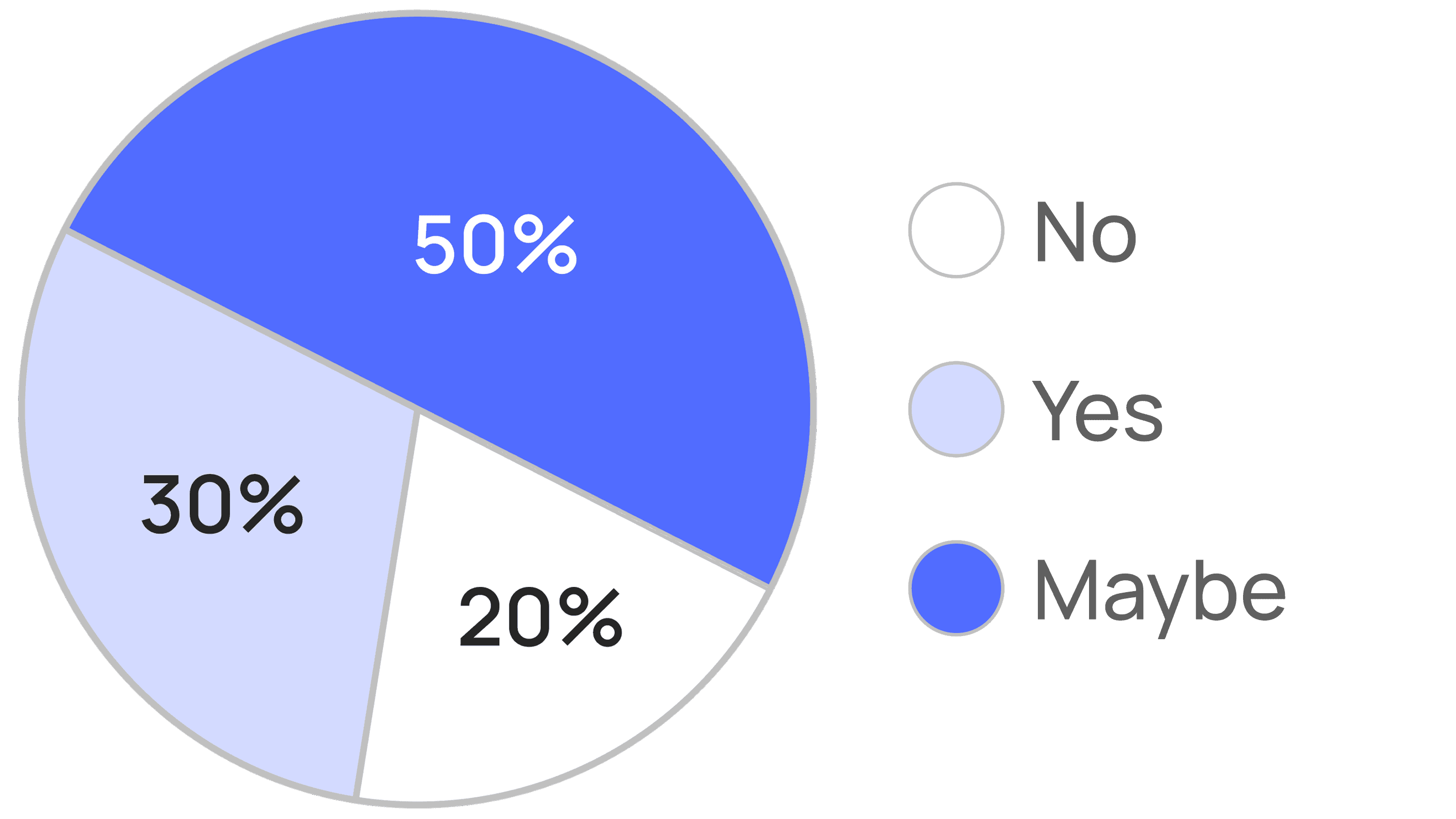
Would you trust temporary staff to do entry level work at your restaurant?

Note: Before collecting responses, we defined entry level work as side tasks, cleaning, restocking, bussing tables, kitchen prep, etc. (requiring minimal to no training), and high skill level work as customer-facing roles like serving, bartending, cooking, etc. (requiring several days of training and crucial for operations).
Note: Before collecting responses, we defined entry level work as side tasks, cleaning, restocking, bussing tables, kitchen prep, etc. (requiring minimal to no training), and high skill level work as customer-facing roles like serving, bartending, cooking, etc. (requiring several days of training and crucial for operations).
Why might restaurants use temporary staff?
Why might restaurants use temporary staff?
Reduces costs
Cuts staff costs, with cheaper temporary workers helping regular employees remain fully productive, but not overworked.
Provides flexibility
Managers can keep staffing levels optimal as business needs change, saving them money.
Allows for quick adaptation
Enables business to adjust under workload fluctuations, ie. employee absences, sick or parental leave, seasonal or peak periods.
Reduces costs
Cuts staff costs, with cheaper temporary workers helping regular employees remain fully productive, but not overworked.
Provides flexibility
Managers can keep staffing levels optimal as business needs change, saving them money.
Allows for quick adaptation
Enables business to adjust under workload fluctuations, ie. employee absences, sick or parental leave, seasonal or peak periods.
Flexibility is Priority
Flexibility is Priority
Gen Z workers may be the generation that prioritize flexibility the most - they dislike working extensive hours, and need work-life balance, making a temporary work model especially appealing.
Gen Z workers may be the generation that prioritize flexibility the most - they dislike working extensive hours, and need work-life balance, making a temporary work model especially appealing.
Source: U.S. Bureau of Labor Statistics
Reasons motivating employees to take their current restaurant job
Reasons motivating employees to take their current restaurant job
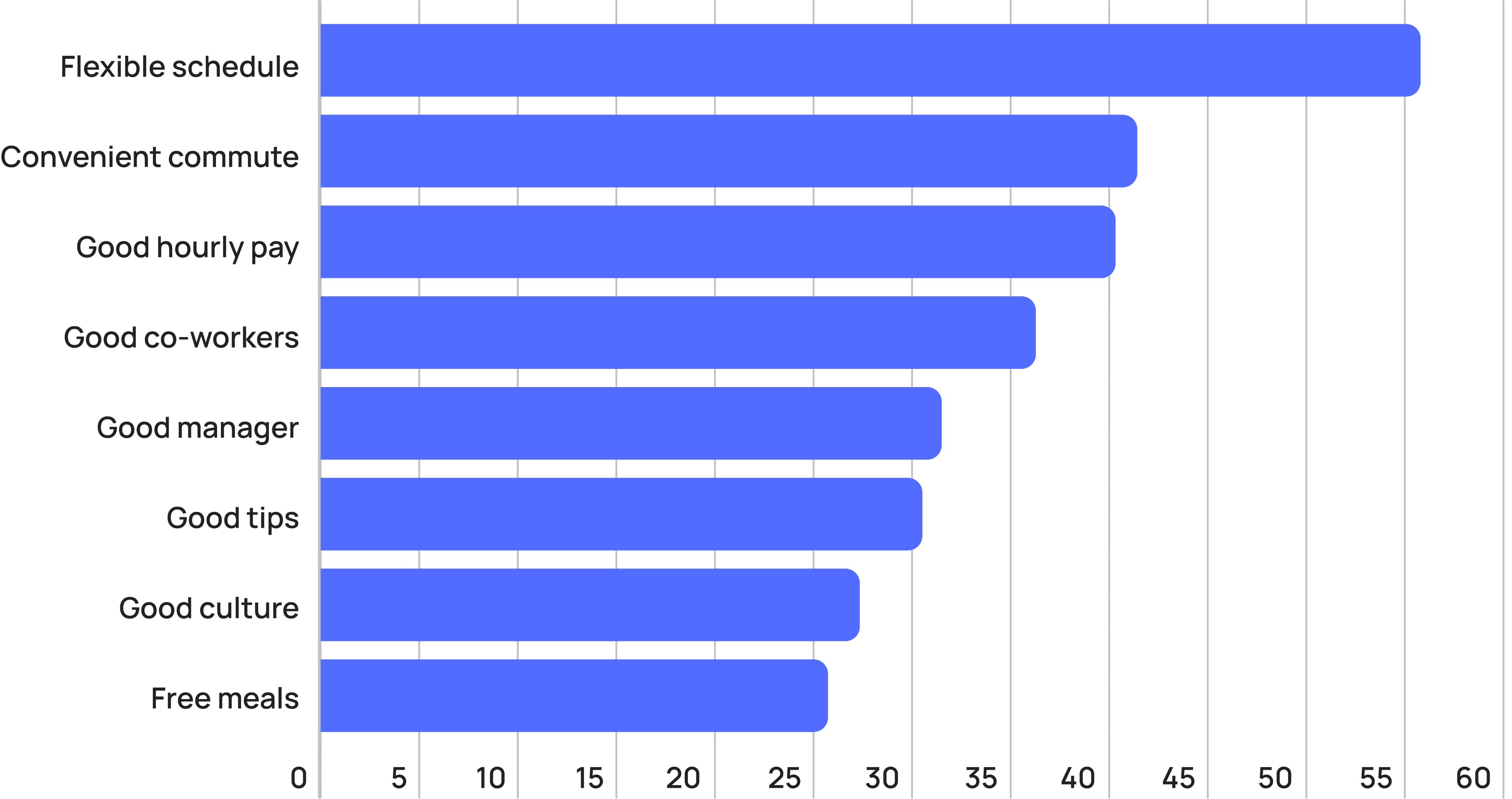
Source: IBISWorld Blind Survey(2021), n=1,011 US Restaurant Employees
When thinking about why you joined your current job, what were your top reasons?
1/3
of Gen Z demand control over their work schedule and won’t work when they don’t want to.
1/3
of Gen Z will not tolerate working back to back shifts.
41%
of Gen Z were employed while full-time college students in 2018 and 2019.
1/3
of Gen Z demand control over their work schedule and won’t work when they don’t want to.
1/3
of Gen Z will not tolerate working back to back shifts.
41%
of Gen Z were employed while full-time college students in 2018 and 2019.
Target Users
Target Users
After gathering both secondary research and talking directly to those experiencing the current problem, we defined two possible target end users for the solution.
After gathering both secondary research and talking directly to those experiencing the current problem, we defined two possible target end users for the solution.
Restaurant Manager or Owner
Restaurant Manager or Owner
Based on research findings, the target user was defined as the manager or owner of a food service establishment that can benefit from help of entry level to medium-skilled temporary workers. These businesses would be full-service, single-location restaurants (SLRs) or chains within the casual dining category in densely populated areas. These restaurants will likely be more receptive to using entry level temporary staff than upscale, fine dining institutions.
Based on research findings, the target user was defined as the manager or owner of a food service establishment that can benefit from help of entry level to medium-skilled temporary workers. These businesses would be full-service, single-location restaurants (SLRs) or chains within the casual dining category in densely populated areas. These restaurants will likely be more receptive to using entry level temporary staff than upscale, fine dining institutions.


College Students
College Students
College students are always searching for part-time, low-demand jobs, but on-campus opportunities are limited. Most Gen Z students already work 15-35 hrs/week (regardless of income bracket), and those who work moderate hours (15–20 hrs/week) tend to perform better academically than those who don't work. Bluplate would appeal to this group, especially students with prior food service or hospitality experience.
College students are always searching for part-time, low-demand jobs, but on-campus opportunities are limited. Most Gen Z students already work 15-35 hrs/week (regardless of income bracket), and those who work moderate hours (15–20 hrs/week) tend to perform better academically than those who don't work. Bluplate would appeal to this group, especially students with prior food service or hospitality experience.
Wireframe Testing
Wireframe Testing
Due to time constraints, I designed the "student mode" of the platform. Using basic, low-fi wireframes, I had three participants interact with a rough prototype as a new student user, tasked with signing up, finding a shift, and clicking through major screens. Their feedback helped identify macro-level changes and enhancements for improved IA, performance, and overall UX.
Due to time constraints, I designed the "student mode" of the platform. Using basic, low-fi wireframes, I had three participants interact with a rough prototype as a new student user, tasked with signing up, finding a shift, and clicking through major screens. Their feedback helped identify macro-level changes and enhancements for improved IA, performance, and overall UX.
Student User Test Scenario
Key feedback included streamlining onboarding with one-time verification codes (mobile/email), adding third-party student status verification, and ensuring a payment method is set up early. For shift searching, users wanted a map view toggle and more shift details (pay, tasks, requirements). They were also curious about a separate manager mode and what this would look like. They liked that adding work preferences could help surface recommended shifts.

Sign up or log in
Sign up or
log in
Sign up or log in

Add University
Add
University
Add University

Add Personal Info
Personal
Info
Add Personal Info

Add Work Docs
Add
Work Docs
Add Work Docs

Search Shifts
Search
Shifts
Search Shifts

Restaurant Info
Restaurant
Info
Restaurant Info

Student Profile
Student
Profile
Student Profile

Notifications
Notifications
Notifications
Student User
Test Scenario
Key feedback included streamlining onboarding with one-time verification codes (mobile/email), adding third-party student status verification, and ensuring a payment method is set up early. For shift searching, users wanted a map view toggle and more shift details (pay, tasks, requirements). They were also curious about a separate manager mode and what this would look like. They liked that adding work preferences could help surface recommended shifts.
Student User Test Scenario
Key feedback included streamlining onboarding with one-time verification codes (mobile/email), adding third-party student status verification, and ensuring a payment method is set up early. For shift searching, users wanted a map view toggle and more shift details (pay, tasks, requirements). They were also curious about a separate manager mode and what this would look like. They liked that adding work preferences could help surface recommended shifts.
Final Interface
Bluplate differentiates itself from typical temporary staffing apps through a fast and easy recruiting and onboarding process. By handling entry-level tasks requiring minimal training, student workers can free up full-time, skilled staff members to operate more efficiently. This allows restaurants to meet customer demand and grow revenue and margins, while giving students flexible schedules.

Quick & Easy Onboarding
For students, Bluplate registration is simple and intuitive. Users (new or returning) verify identity with a one-time password sent via email or mobile, confirm their student status, add personal and contact information, upload documentation, and link their bank account. Users can choose work tasks they like and continue build their profile until Bluplate has granted access to start working.
For students, Bluplate registration is simple and intuitive. Users (new or returning) verify identity with a one-time password sent via email or mobile, confirm their student status, add their personal and contact information, upload work documentation, and link their bank account. Users can choose work tasks they like and continue build their profile until Bluplate has granted access to start working.
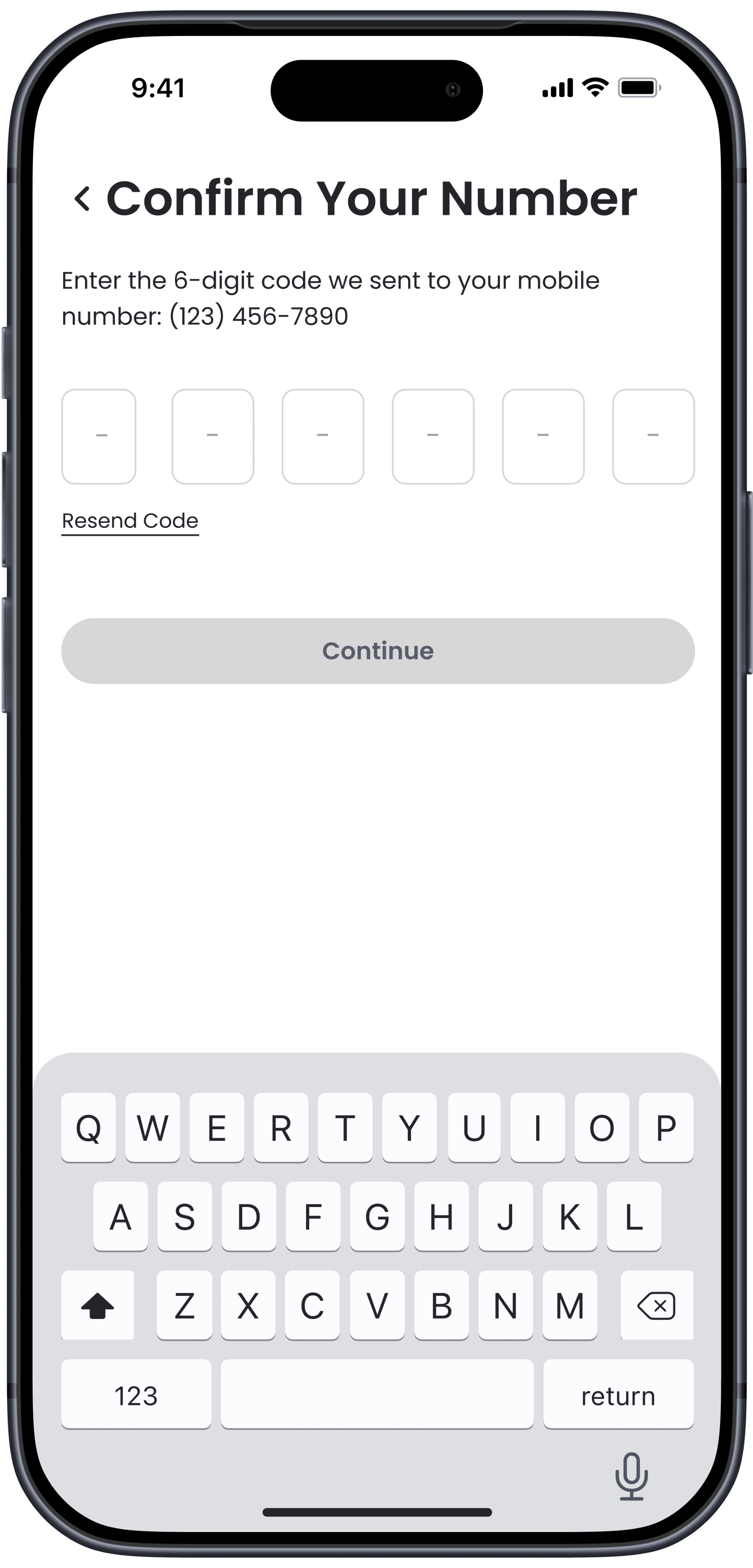
One-time password
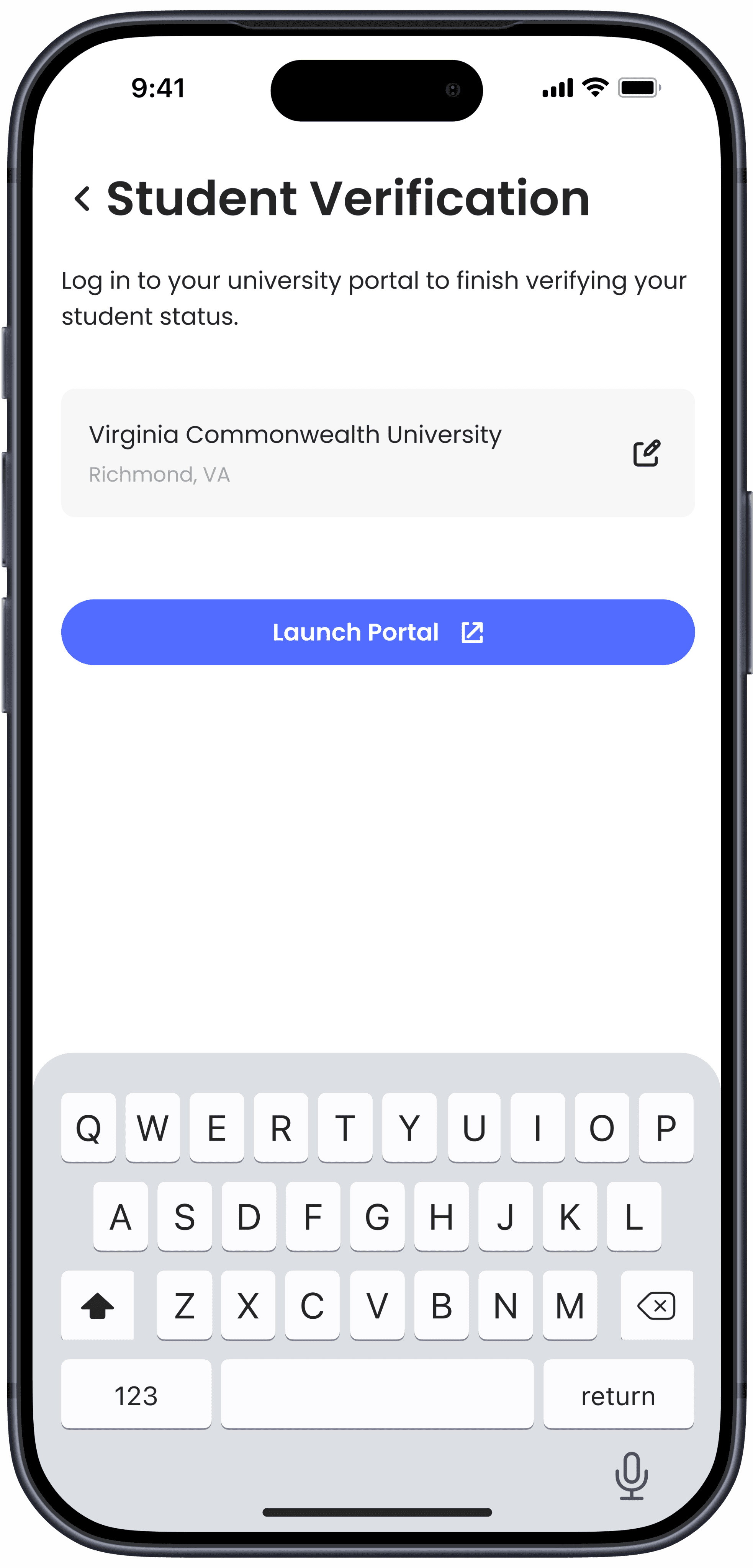
Verify student status

Upload work documents

Set up direct deposit
Build Your Schedule
When a user is approved to work, they can view posted shifts nearby via list or map, and can sort by pay rate, total pay, or shift length. Users can search by task or restaurant name and adjust the date to see upcoming shifts. Tapping a shift card reveals all details and allows users save for later. Tapping a restaurant name opens that profile with additional info, ratings and available shifts.

Browse available shifts

View shift details

See what's nearby

View restaurant details
When a user is approved to work, they can view posted shifts nearby via list or map, and can sort by pay rate, total pay, or shift length. Users can search by task or restaurant name and adjust the date to see upcoming shifts. Tapping a shift card reveals further details and allows users to save for later. Tapping a restaurant name opens that profile with additional info, ratings and available shifts.
On their profile, users can view earnings, access their saved restaurants and shifts, and manage preferred work tasks. The schedule tab shows pending requests, upcoming shifts, and shift history. Notifications alert users to time-sensitive shifts, approvals, and reminders to leave reviews. Bluplate will monetize through a percentage cut of each shift's total payment.
Profile Management
On their profile, users can view earnings, access saved restaurants and shifts, and manage preferred work tasks. The schedule tab shows pending requests, upcoming shifts, and shift history. Notifications alert users to time-sensitive shifts, approvals, and reminders to leave reviews. Bluplate monetizes through a percentage cut of each shift's total payment.

Student profile

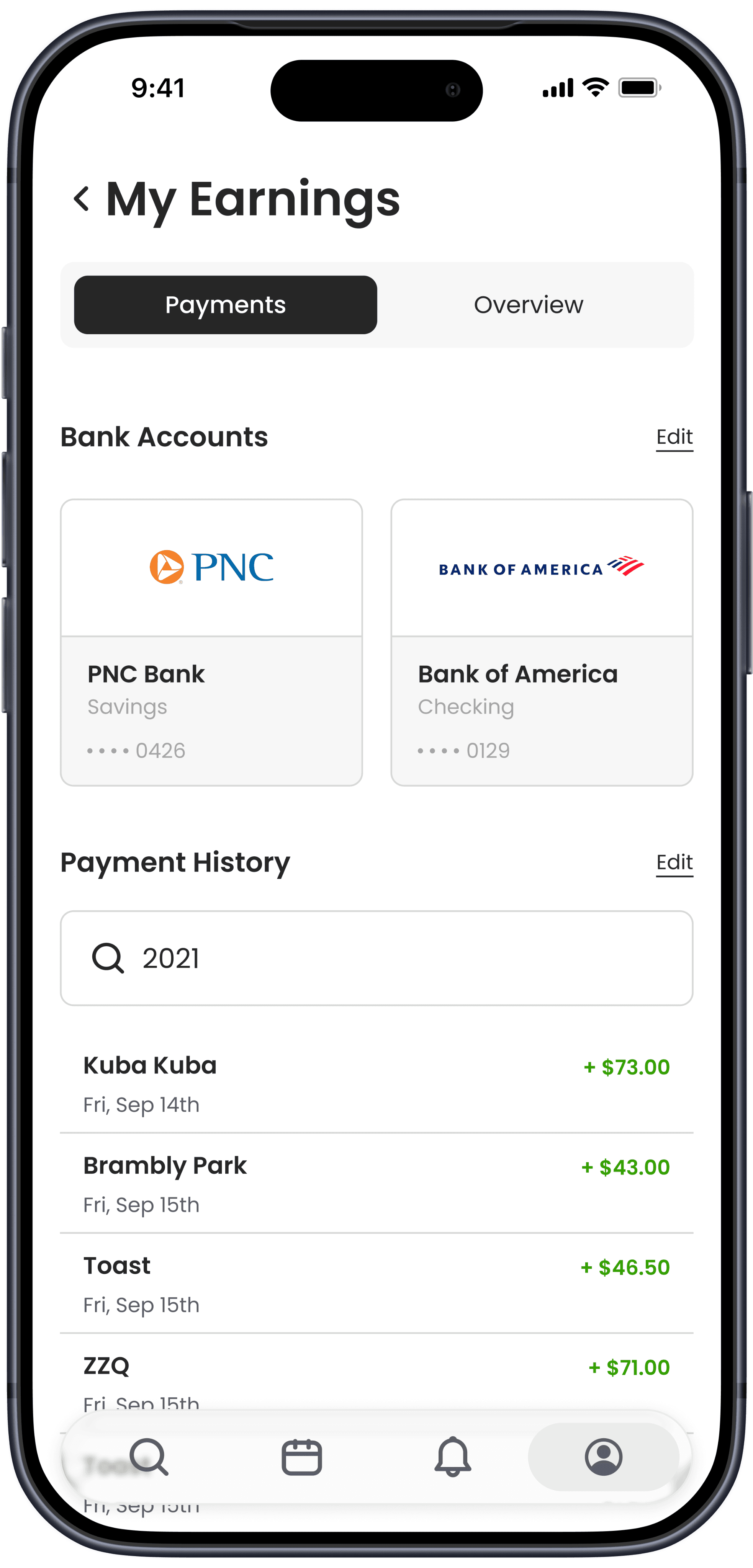
View your earnings
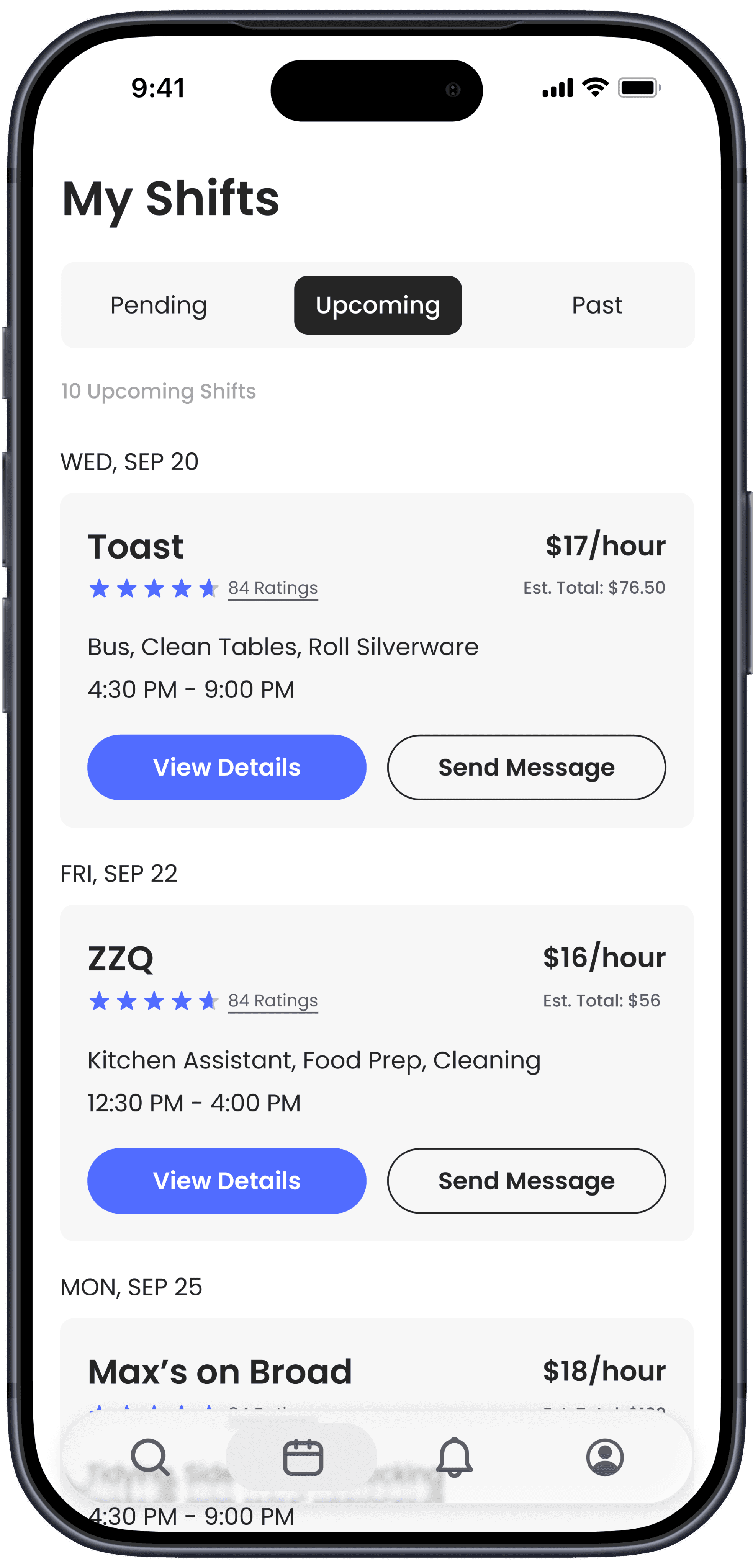
Track your shifts
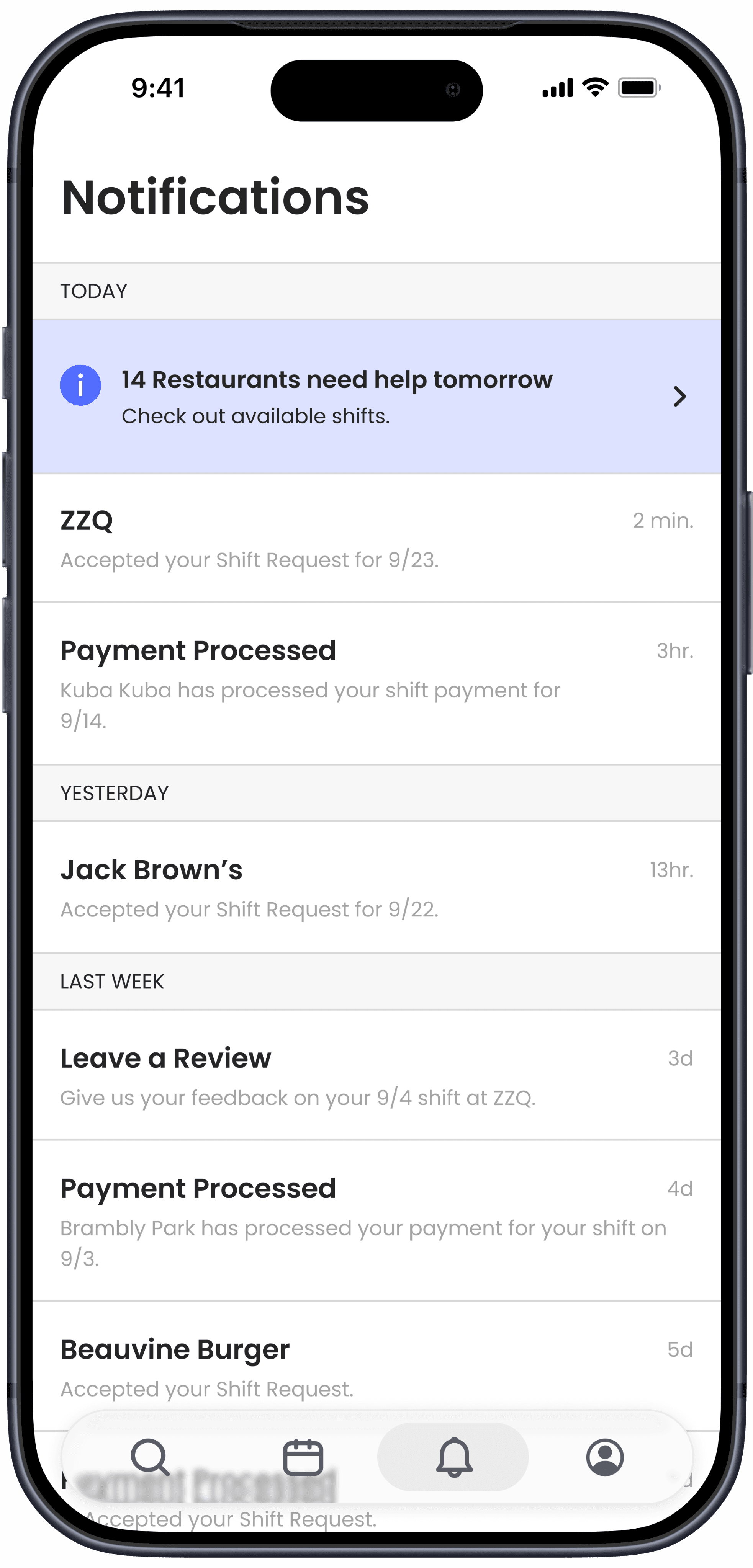
Stay updated
Final Interface
Bluplate differentiates itself from typical temporary staffing apps through a fast and easy recruiting and onboarding process. By handling entry-level tasks requiring minimal training, student workers can free up full-time, skilled staff members to operate more efficiently. This allows restaurants to meet customer demand and grow revenue and margins, while giving students flexible schedules.
Quick & Easy Onboarding
One-time password
Verify student status
Upload work documents
Set up direct deposit
For students, Bluplate registration is simple and intuitive. Users (new or returning) verify identity with a one-time password sent via email or mobile, confirm their student status, add their personal and contact information, upload work documentation, and link their bank account. Users can choose work tasks they like and continue build their profile until Bluplate has granted access to start working.
Build Your Schedule
Browse available shifts
View shift details
See what's nearby
View restaurant details
When a user is approved to work, they can view posted shifts nearby via list or map, and can sort by pay rate, total pay, or shift length. Users can search by task or restaurant name and adjust the date to see upcoming shifts. Tapping a shift card reveals further details and allows users to save for later. Tapping a restaurant name opens that profile with additional info, ratings and available shifts.
Profile Management
Student profile
Student
profile
View your earnings
Track your shifts
Track your
shifts
Stay updated
Stay
updated
On their profile, users can view earnings, access their saved restaurants and shifts, and manage preferred work tasks. The schedule tab shows pending requests, upcoming shifts, and shift history. Notifications alert users to time-sensitive shifts, approvals, and reminders to leave reviews. Bluplate will monetize through a percentage cut of each shift's total payment.
Takeaways
Takeaways
While this product might not solve the restaurant labor crisis right away, it could ease the burden on businesses as workers gradually re-enter the workforce once federal benefits end and wages increase. To build a sustainable competitive advantage, Bluplate should be more than a temporary fix - it should be flexible and scalable enough to expand their offerings and user base over time, whether through introducing app-sharing incentives, university and student-focused brand partnerships, or new forms of on-campus employment.
Learning firsthand from business owners and managers throughout this process was eye-opening, and made me realize that solving an industry-wide problem starts with listening closely to the people living it. In an industry so dependent on labor, managers were more receptive to this idea than I expected. Ultimately, this project was a lesson that developing meaningful products requires meeting real human needs.
While this product might not solve the restaurant labor crisis right away, it could ease the burden on businesses as workers gradually re-enter the workforce once federal benefits end and wages increase. To build a sustainable competitive advantage, Bluplate should be more than a temporary fix - it should be flexible and scalable enough to expand their offerings and user base over time, whether through introducing app-sharing incentives, university and student-focused brand partnerships, or new forms of on-campus employment.
Learning firsthand from business owners and managers throughout this process was eye-opening, and made me realize that solving an industry-wide problem starts with listening closely to the people living it. In an industry so dependent on labor, managers were more receptive to this idea than I expected. Ultimately, this project was a lesson that developing meaningful products requires meeting real human needs.